SYNTHESIS 001 · DEVELOPMENT PREVIEW

Brand-new
water.

We made the water.
Not just the bottle.

Concept prototype · Not yet for sale · No orders or personal data collected

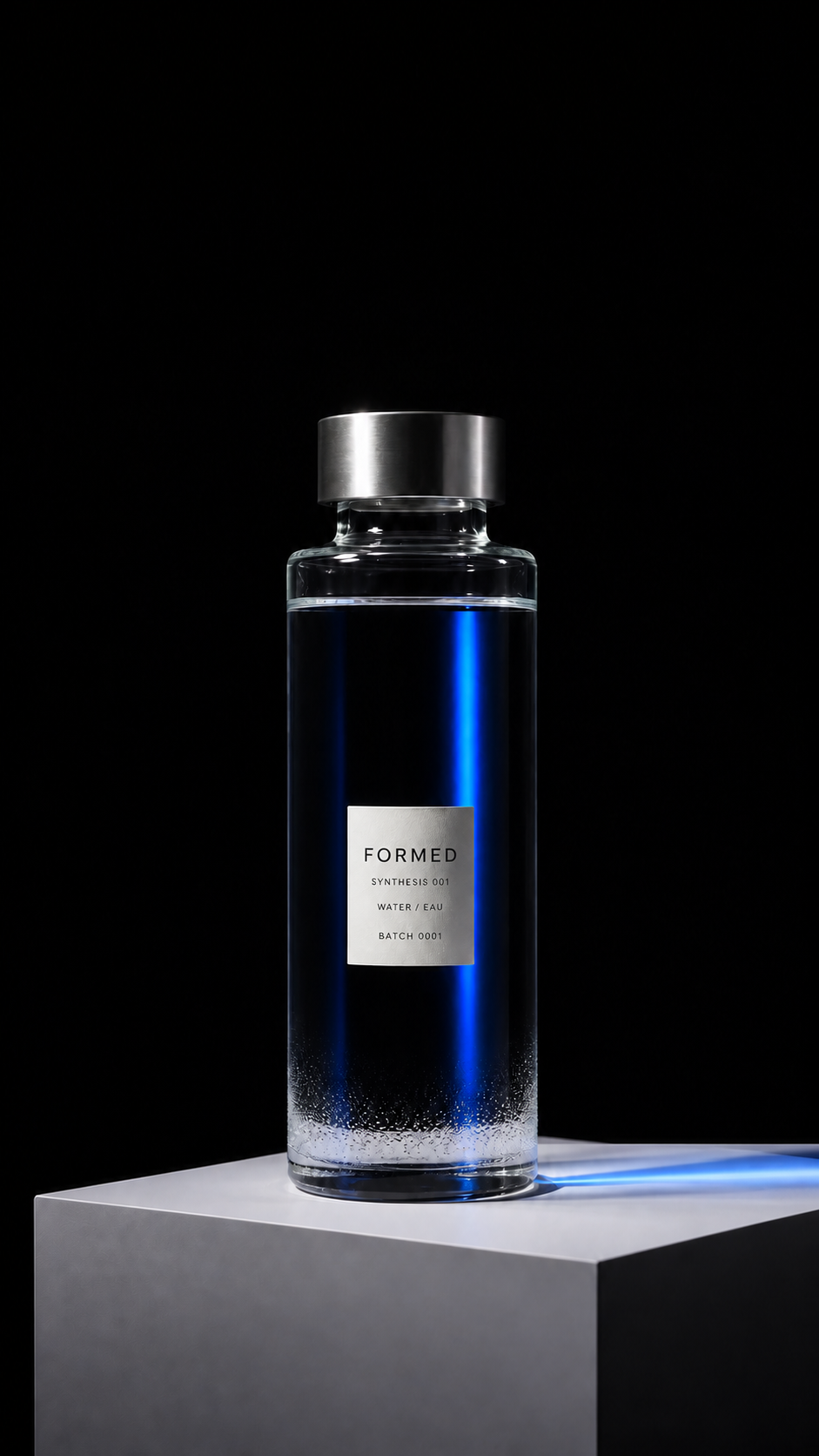
Concept bottle for FORMED Synthesis 001 water, shown in clear glass with a white laboratory label
500 mL · Clear flint glass · Concept packaging
ORIGINLABORATORY
STATUSPRE-COMMERCIAL
PROVENANCEBATCH-RECORDED
H₂O MOLECULESFORMED HERE

A new provenance

Most premium water tells you where it was found.

Ours tells you when it began.

A source tells you where. A batch record tells you when. FORMED is a proposed new kind of drinking water: H₂O molecules created by a controlled electrochemical process, then purified, tested and released by batch.

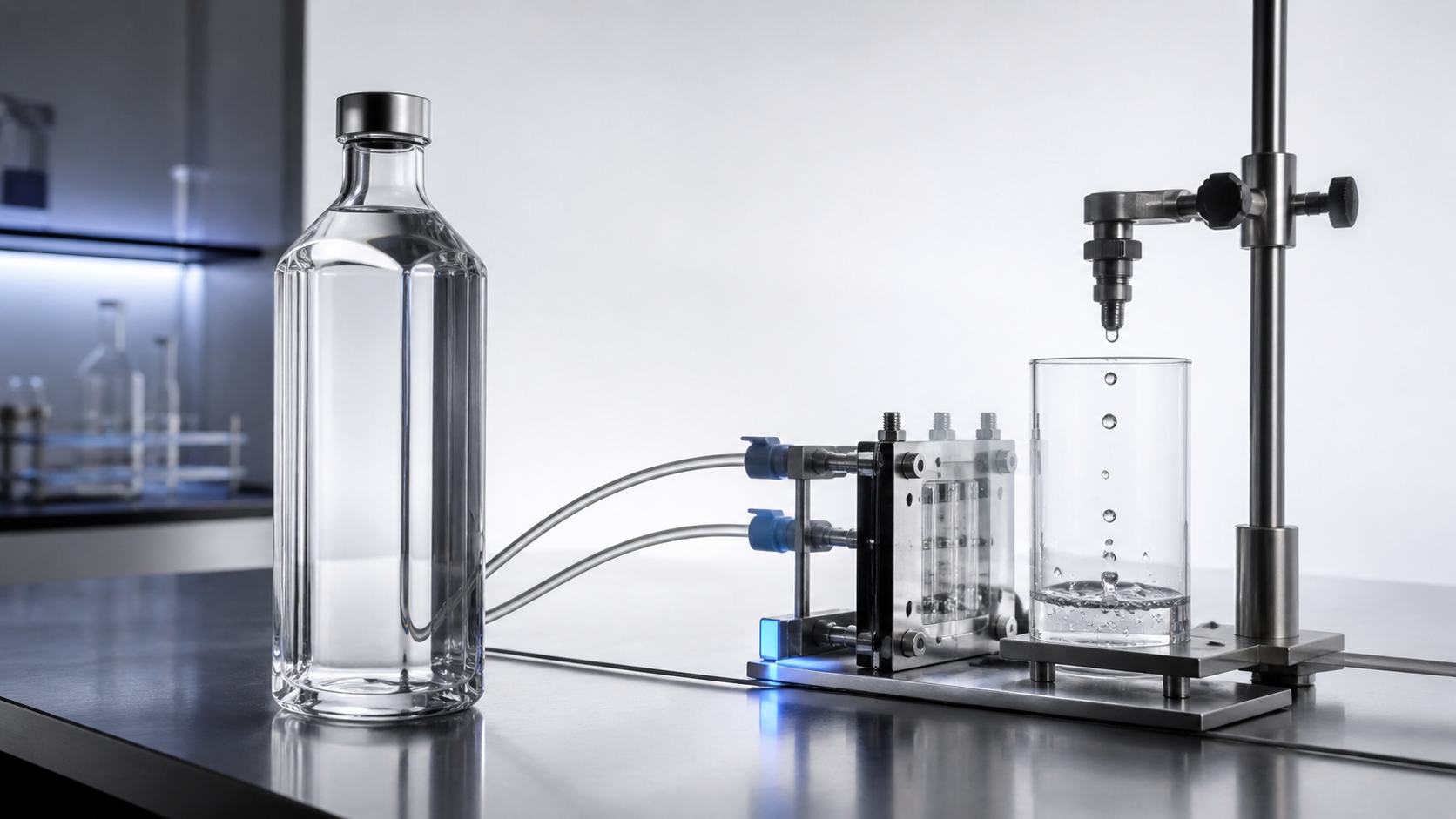
Concept laboratory scene showing a compact electrochemical cell, clear receiving vessel and glass bottle

Process visualization · Open collection within a dry nitrogen-purged clean enclosure · Final system pending engineering and validation

FORMATION METHOD

Not found.
Formed.

Hydrogen and oxygen enter a controlled electrochemical system. The reaction forms H₂O and generates electricity.

  1. 01
    Combine

    Specified hydrogen and oxygen inputs meet inside an engineered electrochemical cell.

  2. 02
    Collect

    The newly formed water is separated in a closed sanitary path.

  3. 03
    Release

    Purification, microbiological controls and independent testing determine whether a batch can be bottled.

Formation alone does not make water potable. Final claims depend on a working pilot, validated materials, Canadian regulatory review and lot-specific testing.

THE EXISTING-WATER INDUSTRY

Why buy
pre-owned
water?

This is not a punchline. Conventional bottled water begins as existing water from a municipal system, spring, aquifer or other source. Purification changes what is in it. It does not form new H₂O.

EXISTING-WATER HISTORY REPORT PREVIOUSLY CIRCULATED H₂O
FORMATION UNDOCUMENTED
Source category
Spring / aquifer / municipal
Hydrologic circulation
Existing system
Treatment
May be filtered or purified
H₂O formation during treatment
Not claimed
Pre-bottling molecular custody
Undocumented
Documented formation date
Not available

Our definition: “Pre-owned water” means existing H₂O taken from Earth’s hydrologic system before bottling. Filtered, distilled, reverse-osmosis, spring and glacial waters can be safe and high quality; they are still existing water. The term does not allege contamination or prior human consumption.

THE INDUSTRY RECORD

The label changes.
The water already existed.

We checked company disclosures, government records and independent audits. The products reviewed sell source, treatment, remoteness and packaging. None claims a documented batch of deliberately newly formed H₂O.

01 / MUNICIPAL

Public-system water can become a national bottled-water brand.

Coca-Cola’s current U.S. DASANI water-quality report says most facilities that purify and bottle DASANI procure water from municipal water systems. The company then uses treatment including reverse osmosis and adds minerals for consistent taste. This is a U.S. disclosure, not proof about Canadian DASANI sources.

Company source ↗

02 / SAME START, THREE POSITIONS

Public water becomes purity, alkalinity or “cloud-inspired” distillation.

Aquafina says it originates from public water sources and uses reverse osmosis and other purification. Essentia’s 2023 report says it begins with potable municipal water, then uses filtration, reverse osmosis, electrolytes and ionization. A 2018 smartwater report says most facilities used municipal systems, followed by vapor distillation and added electrolytes. These disclosures describe treatment and branding—not deliberate new H₂O formation.

03 / HOPE, BRITISH COLUMBIA

One spring. Multiple brands. Two countries.

A 2021 Alliance for Water Stewardship audit says the Hope plant bottled Arrowhead Mountain Spring, Pure Life Spring Water Canada, Pure Life Purified US, Aberfoyle Spring, Montclair Spring and Splash for distribution across Western Canada and the United States. The audit says bottled product came from Hope Springs; municipal water served domestic facility uses.

Independent audit ↗

04 / PUBLIC KNOWLEDGE

The public aquifer record still contains blanks.

B.C.’s March 2025 factsheet for the Kawkawa Lake aquifer lists productivity, transmissivity and storativity as unknown and identifies no active provincial observation well. That is not proof of depletion or harm. It is a documented information gap around a commercially used water source.

B.C. aquifer factsheet ↗

05 / DISCLOSURE

Purification can remove the municipal-source words from the front story.

The U.S. Government Accountability Office reported that bottled water from a public system must identify that source unless treatment makes it “purified,” “distilled,” “deionized,” “sterile” or “sterilized” water. Treatment can change the required identity. It does not create new H₂O molecules.

U.S. GAO report ↗

06 / PROVINCIAL RESOURCE

In 2021, B.C. priced bottling groundwater at dollars per million litres.

The Narwhal reported a C$2.25-per-million-litre rate, 16.75 billion litres licensed annually for bottling and about C$44,000 in provincial return, citing the province and a University of Victoria Environmental Law Centre report. It also reported a proposed Clinton-area project seeking 864,000 litres per day for export while a High Bar First Nation councillor described inadequate drinking-water access and opposed the proposal over aquifer stress. These are reported 2021 facts and figures, not a claim about today’s fee schedule or project status.

Investigation and cited records ↗

07 / PACKAGED EXPORT

B.C.’s bulk-export restriction draws a line around the bottle.

The province says its Water Protection Act restricts bulk water removal while exempting water carried in containers of 20 litres or less. B.C. affirms public ownership of surface water and groundwater, then allows licensed water to leave in retail-sized packages.

B.C. Water Protection Act overview ↗

08 / LOCAL CONSENT

Ontario changed its law so large new groundwater takings need local support.

Since 2021, a proposed new or increased bottled-water groundwater taking above 379,000 litres per day must first seek a supporting resolution from its host municipality. Ontario adopted the rule after public, municipal, Indigenous and other stakeholder comments.

Ontario decision record ↗

09 / THE MARKETING

The industry sells a travel biography.

Whistler Water markets an “ancient glacial water source” and an “age-old cycle.” FIJI Water narrates cloud, tropical rain, volcanic rock and an artesian aquifer. Those stories may describe real sources. They also confirm the central fact: conventional premium water is sold on where existing water has been.
Spring is a source story. Purified is a treatment story. Glacial is a storage story.

FORMED is a beginning.

THE FIRST RELEASE

Batch 0001

A proposed founder edition, individually numbered and paired with its formation record. Nothing is represented here as produced, tested or commercially released yet.

FORMATION RECORD
FORMED / SYNTHESIS 001

BATCH IDENTIFIER

0001

PILOT PENDING

Formation date
Pending pilot
Formation system
To be validated
Potability release
Not issued
Third-party analysis
Not commissioned
Bottles released
0
Commercial status
Concept only

Every future certificate must resolve to the actual bottle, batch, tests and chain of custody.

THE OBJECT

Evidence
you can hold.

Heavy clear glass. Restrained typography. A numbered label. No alpine peaks, no waterfalls, no invented legends.

Format
500 mL
Container
One-way flint glass
Label
Batch-specific
Edition
Founder study

FORMED

SYNTHESIS 001

H₂ + ½O₂ → H₂O
WATER / EAU
500 mL
ORIGIN
LABORATORY
BATCH
0001

NOT FOUND. FORMED.

PLAIN ANSWERS

Before you ask.

Is the water real?

The chemistry is real: combining hydrogen and oxygen forms H₂O. The exact commercial beverage system shown here is still a product-development proposal, not an operating production line.

Are the atoms new?

No. The atoms already exist. The precise claim is that H₂O molecules are newly formed in the documented process.

Is “pre-owned water” literal?

Yes, as we define it. Conventional bottled water is existing H₂O sourced from the hydrologic system and then collected, treated or bottled. Those processes may improve quality, but they do not document the formation of new H₂O molecules. “Pre-owned” does not mean unsafe or contaminated.

Is ordinary water unsafe?

No. Ordinary regulated drinking water is generally safe. Our challenge is about provenance, resource use and marketing—not an unsupported claim of health, safety or purity superiority.

Can I buy it?

Not yet. A working food-safe pilot, regulatory interpretation, independent testing, packaging validation and real fulfilment tests must come first.

Why make it at all?

Because premium water has spent decades selling age and distance. We want to know whether a documented beginning can become a different kind of provenance.

SYNTHESIS 001

The first bottle
has not been formed.

That is why its record is still perfectly clean.

CONCEPT RECORD

Batch 0001 has not started.

The production record will not be decorated with invented results. When a pilot exists, this view must show the real formation time, process configuration, gas specifications, material path, purification controls, analytical results, release decision and bottle range.

PREVIEW ONLY

The formation list is not collecting data yet.

This public concept preview deliberately has no signup backend. Once the product, claims and privacy flow are ready, this becomes the single high-intent action.